
Soothe a Sore Throat Naturally with Raw Honey: A Time-Tested Remedy
Share
Raw Honey for Sore Throat: How It Works and How to Use It
You feel that scratch at the back of your throat and the first instinct is to grab a lozenge or pour a spoonful of cough syrup. Makes sense. But here is something most people do not know: raw honey has more clinical research backing it for sore throat relief than most of what is sitting in your medicine cabinet.
This is not your grandmother's folk remedy anymore. Multiple clinical trials and peer-reviewed studies have looked at honey for upper respiratory symptoms - and the results are genuinely impressive. This post breaks down why it works, how to use it, and what to combine it with for the best results.
Why Raw Honey Actually Works (Not Just Why It Feels Good)
Honey does not work on a sore throat for one reason. It works because of several things happening at the same time, which is why it tends to outperform products that only do one thing.
It coats and protects your throat
The most immediate effect is physical. Honey is thick. When you swallow a spoonful, it coats the back of your throat and forms a temporary layer over the inflamed tissue. That layer does two things: it physically shields the irritated nerve endings that are triggering your cough reflex, and it keeps all the active properties in honey sitting directly on the infection site instead of being washed away immediately.
This is why taking honey straight off the spoon works better than stirring it into a drink. You want it to stay on your throat, not in a glass of water.
It produces a natural disinfectant right where you need it
This is the part most people do not know about. Raw honey contains a natural enzyme that - when it contacts the moisture of your throat - starts producing small amounts of hydrogen peroxide. Yes, the same compound used to disinfect cuts. Except in honey it is released slowly and gently, right on the tissue that needs it most.
Research published in Food Chemistry confirmed that this enzyme-driven hydrogen peroxide production is the primary reason honey has antibacterial properties, and a separate study in Naturwissenschaften showed that the more of this enzyme honey contains, the stronger its antibacterial activity against pathogens.
Here is the critical part: this enzyme is destroyed by heat. Pasteurized honey - the perfectly clear, smooth stuff in most grocery stores - has been heated to temperatures that wipe out this enzyme entirely. The honey still tastes sweet and still coats your throat, but the disinfectant mechanism is gone. This is the single biggest reason why raw, unpasteurized honey matters for actually treating a sore throat rather than just soothing one.
It is naturally acidic - and bacteria hate that
Honey sits at a pH of about 3.2 to 4.5 - roughly as acidic as orange juice. Most throat pathogens cannot survive or reproduce in that environment. This works alongside the low moisture content of honey to essentially dehydrate and kill bacteria on contact. No special compound needed - just the natural chemistry of real honey.
It reduces inflammation
Raw honey contains antioxidants from the flowers and pollen the bees visited. These are the same plant compounds that give fruits and vegetables their anti-inflammatory properties. When honey sits on your inflamed throat tissue, these compounds help calm the swelling and redness that cause most of the pain. Darker honeys - like wildflower or buckwheat - tend to have more of these compounds because they come from a wider variety of plants.
Our Quebec wildflower honey draws from the diverse flora of the Quebec landscape across the seasons, giving it a richer antioxidant profile than single-source commercial varieties.
What the Research Actually Says
If you want the short version: honey consistently beats standard treatments in clinical trials for sore throats and coughs. Here is the longer version.
Researchers at Oxford University conducted a systematic review published in BMJ Evidence-Based Medicine that looked at 14 separate clinical trials involving 1,761 patients. Their conclusion was that honey outperformed standard care for overall symptom scores, cough frequency, and cough severity. They also pointed out that honey is a cheap, widely available alternative to antibiotics at a time when antibiotic overuse is a serious global problem.
A randomized controlled trial published in the Journal of Tropical Pediatrics tested honey head-to-head against diphenhydramine - the active ingredient in many over-the-counter cough and cold syrups - in 84 children with throat infections. Honey won on both cough frequency and severity.
Worth being honest about the limits too: the Oxford review noted that direct comparisons with placebo are tricky in honey studies because it is hard to give someone a believable fake version of honey. So while the evidence against standard treatments is strong, the evidence against placebo is harder to measure. That does not change the practical conclusion - honey works better than the things people normally take for sore throats.
How to Use It
The simplest method: straight off the spoon
Take one teaspoon of raw honey directly off a spoon and let it slowly coat the back of your throat. Do not drink anything right after - you want it to stay on the tissue. Do this 2 to 3 times a day, and always right before bed. Nighttime is when coughs get worst because lying down triggers more dripping from the sinuses. The honey coating helps protect your throat overnight and reduces that 2am coughing fit that wrecks your sleep.
Honey, lemon, and warm water
Squeeze half a lemon into a glass of warm water, let it cool to a comfortable drinking temperature, then stir in a teaspoon or two of raw honey. The lemon adds vitamin C and makes the environment even less hospitable for bacteria. The warm water helps loosen mucus.
The one rule: never add honey to boiling water or hot tea. Anything above roughly 40 degrees Celsius kills the enzyme that produces hydrogen peroxide. Your honey becomes just a sweetener. Let the drink cool before adding it. Read our full post on when and how to take raw honey for more on why temperature matters so much.
Honey and ginger
Ginger has its own anti-inflammatory properties that work well alongside honey. Slice or grate fresh ginger into a cup, pour hot water over it, let it steep for 5 minutes, then wait until it cools before stirring in your honey. Add lemon if you have it. This is the combination most traditional medicine systems landed on independently - and modern research backs up why.
Honey salt gargle
Mix a tablespoon of honey into a small glass of warm salted water, gargle for 30 to 60 seconds, then swallow rather than spit. You want the honey to stay in contact with your throat. The salt helps reduce swelling in the tissue before the honey gets to work on it.
Honey vs. What Is in Your Medicine Cabinet
| Remedy | What It Does | Evidence | Downsides |
|---|---|---|---|
| Raw honey | Coats, disinfects, reduces inflammation | Strong - multiple RCTs and Oxford meta-analysis | Avoid under 12 months old |
| Throat lozenges | Numbs and masks pain | Modest - treats symptoms only | Does not address infection |
| Cough syrup (antihistamine) | Blocks histamine receptors | Weaker than honey in head-to-head trials | Drowsiness, dry mouth |
| Antibiotics | Kills bacteria | Only works for bacterial infections - useless for viruses | Disrupts gut bacteria, contributes to resistance |
| Pasteurized honey | Coats the throat only | Limited - active enzyme is destroyed by heat | Not therapeutic beyond soothing |
A Note on Children
The research on honey for coughs and sore throats is actually strongest in children - multiple clinical trials specifically studied kids, and the results consistently beat standard medications. Honey is safe and effective for children over 12 months old, and it is one of the few remedies that actually tastes good, which helps enormously when you are trying to get a sick child to take something.
Never give honey to babies under 12 months old. Honey can contain spores that are completely harmless to older children and adults but can cause a serious illness called infant botulism in babies whose digestive systems are not yet mature enough to handle them. This rule applies to all honey including raw honey. After their first birthday, it is safe.
What to Do When You First Feel It Coming On
Most people wait until they are fully sick before reaching for a remedy. Starting earlier makes a real difference.
The moment you feel that first scratch in your throat, take a teaspoon of raw honey straight off the spoon. Do the same before bed. On day two if symptoms are building, go to three doses a day - morning, afternoon, and night - and add the ginger-lemon combination once during the day.
The most important dose is always the bedtime one. That is when your throat is most vulnerable, when coughing is worst, and when you need the coating to work through the night.
Frequently Asked Questions
How fast does it work?
You feel the soothing coating effect within minutes. For actually reducing infection and inflammation, most people notice real improvement within 12 to 24 hours of consistent use - similar to what was seen in the clinical trials.
What if I only have pasteurized honey?
It will still soothe your throat through the coating effect and the natural acidity. But the enzyme-driven disinfectant mechanism will not be there. It is better than nothing - just not as effective as raw. See our guide on how to read honey labels so you know what to look for next time you buy.
What about strep throat?
Strep is a bacterial infection and honey has genuine antibacterial properties, so it will help with symptoms and comfort. But confirmed strep - especially in kids - usually needs antibiotics to prevent rare complications. Use honey alongside medical treatment, not instead of it. If your sore throat is severe, comes with a high fever, or lasts more than a few days, see a doctor.
Can I take honey while pregnant?
Yes. The botulism concern applies only to babies under 12 months. Healthy adults - including pregnant women - digest any spores without issue.
Does the type of honey matter beyond raw vs. pasteurized?
Raw is the most important factor. Beyond that, darker honeys tend to have more antioxidants because they come from a wider variety of flowers. Manuka honey has a separate antimicrobial compound called methylglyoxal that gives it particularly high potency. But any raw, unpasteurized honey from a trusted source will be genuinely therapeutic.
The Short Version
Raw honey works for sore throats. It coats your throat, produces a natural disinfectant on the tissue, creates an acidic environment bacteria cannot survive in, and reduces inflammation. It beats standard over-the-counter remedies in multiple clinical trials. It has no side effects for anyone over 12 months old. And unlike most things in your medicine cabinet, it actually tastes good.
The only rule that matters: it has to be raw. Pasteurized honey loses the enzyme that makes it genuinely therapeutic. Buy from someone who can tell you how the honey was processed.
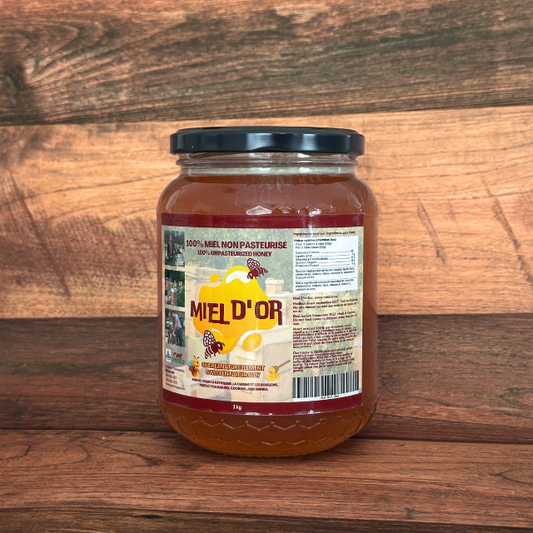
Our Quebec raw honey is cold-extracted from our own hives in Laval, never heated, and minimally filtered - exactly what you want when you actually need it to work. Browse our full honey collection or check our FAQ page if you have questions about how it is made.
Keep a jar at home before you need it. Shop raw Quebec honey here.