
Creamed Honey vs Liquid Honey: 5 Key Differences (And Which One to Buy)
Share
Creamed Honey vs Liquid Honey: 5 Key Differences (And Which One to Buy)
You are standing in front of two jars of honey. One pours like golden syrup. The other is thick, white, and spreadable like soft butter. They are sitting next to each other on the shelf with the same price tag.
Same honey? Different honey? Is one better than the other?
This is one of the most common questions we get at Miel D'or, and the answer is genuinely interesting - because the difference between creamed and liquid honey is not what most people expect. It has nothing to do with the bees, the flowers, or the quality of the honey itself. It comes down entirely to one natural process that beekeepers have learned to control.
Here is the complete breakdown.
First: They Are the Same Honey
This is the most important thing to understand before comparing them. Creamed honey and liquid honey are not two different products. They are two different physical states of the same product - just like water and ice are both water.
Both start in the same place: raw honey extracted from the honeycomb. What happens after extraction determines whether you end up with a runny liquid or a thick, spreadable cream. That process is crystallization - and it is the entire story.
What Is Crystallization and Why Does It Happen?
Honey is a supersaturated sugar solution - meaning it contains more dissolved sugar than water can normally hold in a stable state. Over time, the glucose in honey naturally separates out of solution and forms solid crystals. This is not spoilage. It is not contamination. It is pure chemistry.
A study published in Food Chemistry analyzing 136 honey varieties confirmed that the fructose-to-glucose ratio is the primary driver of how quickly a honey crystallizes. Honeys with lower fructose-to-glucose ratios - meaning more glucose relative to fructose - crystallize faster. Sunflower and rapeseed honeys, for example, are extremely high in glucose and can set solid within days of extraction. Acacia and honeydew honeys have higher fructose ratios and can stay liquid for over a year.
Most wildflower honeys - like our Quebec raw honey - fall somewhere in between, typically crystallizing over weeks to a few months depending on storage temperature and conditions.
The key point: all raw honey will eventually crystallize. If a honey never crystallizes, it has almost certainly been pasteurized and ultra-filtered to remove the pollen particles and microscopic materials that act as the starting points for crystal formation.
What Is Liquid Honey?
Liquid honey is honey in its freshly extracted state - runny, golden, and pourable. It is extracted from the honeycomb by uncapping the wax cells and spinning the frames in a centrifugal extractor. The resulting honey flows freely and is typically strained through mesh to remove wax and debris before bottling.
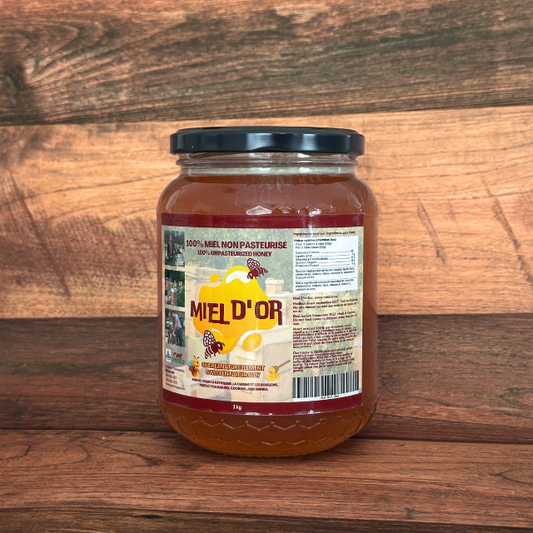
Raw liquid honey retains all of its enzymes, antioxidants, pollen, and active compounds. It is the most recognizable form of honey and what most people picture when they think of the product.
The thing to watch for when buying liquid honey is whether it has been pasteurized. Commercial brands that produce the perfectly clear, crystal-clear liquid that stays runny on store shelves for a year or more have typically been heated to high temperatures to kill the yeast cells that cause fermentation and to dissolve any forming crystals. Research published in Foods journal confirmed that pasteurization at commercial temperatures compromises both physicochemical quality and antioxidant activity - meaning the processing that makes liquid honey shelf-stable also removes much of what makes honey nutritionally valuable.
Raw liquid honey is different. It may look slightly cloudy, may have small visible particles of pollen or beeswax, and will crystallize naturally over time. These are all signs of quality, not problems.
Best uses for liquid honey
- Drizzling over yogurt, cheese, or fruit
- Stirring into drinks - add to lukewarm water or tea that has cooled slightly (never above 40C to preserve enzymes)
- Cooking and baking where honey needs to mix evenly into wet ingredients
- Salad dressings and marinades
- Glazes for roasted vegetables or meats
What Is Creamed Honey?
Creamed honey - also called whipped honey, spun honey, or set honey - is raw honey that has been processed through controlled crystallization to produce an extremely fine, uniform crystal structure. The result is a thick, smooth, spreadable product that looks and feels like soft butter.
There is no cream, no dairy, and no added ingredients. The name comes entirely from the creamy texture - not from any dairy component.
How creamed honey is made: mechanical whipping
At Miel D'or, we make our creamed honey by whipping raw honey mechanically until it transforms into a thick, smooth cream. The whipping action does two things at once: it breaks down any forming crystals into extremely fine particles, and it incorporates tiny air pockets that give the honey its lighter, spreadable consistency.
The result is a product with a uniform, silky texture - no gritty or coarse crystals - because the mechanical agitation keeps the crystal structure fine and even throughout the process. Research on sugar crystal size in honey confirmed that crystal size is the critical variable for mouthfeel - small, uniform crystals produce the creamy consistency, while large uncontrolled crystals create a gritty texture.
No additives, no seed crystals, no pasteurization. Just raw honey and mechanical action. The honey stays raw throughout, so all the enzymes and antioxidants remain fully intact.
Best uses for creamed honey
- Spreading on toast, warm biscuits, croissants, or muffins
- As a topping on oatmeal or overnight oats
- Stirred into plain yogurt or cottage cheese
- Used as a natural frosting or filling for baked goods
- On a cheese board alongside soft cheeses
- Eaten straight off a spoon - the texture makes it particularly satisfying this way
The 5 Key Differences: A Side-by-Side Comparison
| Category | Liquid Honey | Creamed Honey |
|---|---|---|
| Texture | Runny, pourable, sticky | Thick, smooth, spreadable |
| Colour | Golden to amber, translucent | Pale to cream-white, opaque |
| Taste | Floral notes hit immediately | Slightly more mellow, releases slowly |
| Shelf stability | Will crystallize over time | Texture remains stable - already crystallized |
| Nutrition | Identical if both are raw | Identical if both are raw |
The nutrition row is the most important one in that table. If both products are raw and unpasteurized, they are nutritionally equivalent. The creaming process does not destroy enzymes, does not alter antioxidant content, and does not change the fundamental composition of the honey. What you are choosing between is entirely a matter of texture and preferred use.
Difference 1: Texture and Consistency
This is the obvious one. Liquid honey flows. Creamed honey spreads.
The texture difference comes directly from crystal size. In uncontrolled natural crystallization, glucose crystals grow relatively large - which is why honey that spontaneously crystallizes in your cupboard can develop a gritty or grainy texture. Research on sugar crystal size in honey confirmed that crystal size is the critical variable for mouthfeel - honeys with very small crystals have a creamy consistency preferred by most tasters, while large crystals produce a coarse texture.
Difference 2: Colour
Liquid honey ranges from pale gold to deep amber depending on its floral source. Creamed honey is almost always paler - often cream-white or very light beige - even when made from darker honey.
This happens because small crystals scatter light differently than a clear liquid. The fine crystal structure in creamed honey breaks up light before it can pass through, producing the characteristic opaque, pale appearance. This is purely optical - the underlying compounds and colour pigments are the same.
Difference 3: Taste
Both forms carry the full flavour profile of the honey they came from. However, the texture affects the experience of tasting them.
Liquid honey dissolves immediately on contact with your tongue, delivering its floral, sweet, and acidic notes all at once in a single burst. Creamed honey releases its flavour more gradually as the crystals melt - which many people describe as a slightly more mellow, rounded experience. Neither is objectively better; they suit different preferences and contexts.
If you want to fully taste the character of a particular honey - the difference between our wildflower Quebec varieties and something like buckwheat or clover - liquid is typically the more transparent format for comparing flavours side by side. Creamed softens the sharp distinctions slightly.
Difference 4: Shelf Stability and Storage
This is where creamed honey has a practical advantage.
Raw liquid honey will eventually crystallize naturally in your cupboard. The rate depends on the floral source, temperature, and how much pollen and other crystallization nuclei it contains. A raw wildflower honey might begin setting within weeks to a few months. This is not a problem - you can re-liquefy it by placing the jar in warm water - but it does change the product you thought you were buying.
Creamed honey has already completed the crystallization process in a controlled way. Because it is fully set, it does not undergo further significant textural change during normal storage. What you buy is what you get from the first spoonful to the last. This predictability is one reason creamed honey has become popular for gifting and for consumers who want consistent texture.
For both forms: store at room temperature, away from heat and direct sunlight. Do not refrigerate either - cold temperatures will accelerate uncontrolled crystallization in liquid honey and can make creamed honey excessively hard. Never microwave or heat honey above 40 degrees Celsius as this begins to degrade the enzymes. See our full guide on how to store raw honey properly for detailed advice.
Difference 5: Best Uses in the Kitchen
Because liquid honey flows and creamed honey spreads, they perform differently in the kitchen.
Liquid honey is easier to measure precisely for baking, mixes into liquids without resistance, and coats surfaces evenly when used as a glaze or dressing. Creamed honey is better for any application where you want the honey to stay put - on toast, as a topping, or as a filling - rather than dripping off.
Both can be used in cooking, but one practical tip: if a recipe calls for liquid honey and you only have creamed, warm the jar in a bowl of warm (not hot) water for 10 to 15 minutes. The crystals will melt and return the honey to a pourable consistency without heating it enough to damage the active compounds.
Does Creamed Honey Have the Same Health Benefits?
Yes - provided it is made from raw honey and the creaming process does not involve pasteurization.
This is an important distinction. Some commercial producers pasteurize their honey before creaming it. This makes the process more controllable and produces a more uniform product for mass distribution - but it also destroys the enzymes and degrades the antioxidants that make raw honey genuinely different from a simple sugar source.
When creamed honey is made from raw, unpasteurized honey using the seed crystal method - as we do at Miel D'or - the nutritional profile is identical to raw liquid honey. The enzymes are intact. The antioxidants are intact. The pollen is intact. The only thing that has changed is the physical arrangement of the glucose crystals.
Always check whether a creamed honey is also raw. If the label does not say raw or unpasteurized, ask. A producer who is proud of their process will have no problem answering that question. Read our guide on how to read honey labels so you know exactly what to look for.
What About Honeycomb? Where Does It Fit?
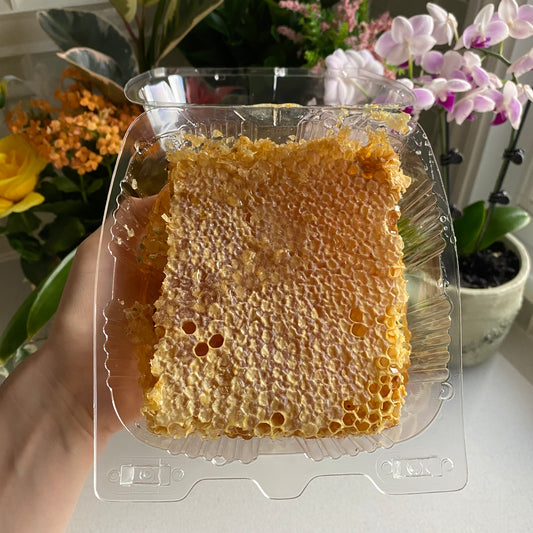
If creamed and liquid honey are two states of processed honey, raw honeycomb is honey in its most untouched form - still sealed inside the beeswax cells the bees built to store it. The honey inside honeycomb is always raw, always unfiltered, and always at its most complete nutritional state.
Honeycomb is worth trying at least once if you want to experience what honey tastes like before any human processing at all - extraction, straining, or crystallization. The flavour and aroma are noticeably different from jarred honey of any kind.
Which Should You Choose?
There is no wrong answer here because - assuming both are raw - you are getting the same nutritional value either way. The choice is entirely about how you want to use it and what texture experience you prefer.
Choose liquid honey if you drizzle more than you spread, if you stir honey into drinks regularly, or if you want to taste the full immediate flavour of a specific floral variety.
Choose creamed honey if you prefer spreading over drizzling, if you want a product whose texture stays consistent throughout storage, or if you are buying it as a gift where presentation and ease of use matter.
Many people keep both on hand for different purposes - and that is probably the most honest recommendation we can make.
One thing that matters more than the choice between them: make sure whichever form you buy is raw and unpasteurized, and that the only ingredient is honey. Everything else is just personal preference.
Frequently Asked Questions
Is creamed honey the same as whipped honey?
Yes. Creamed honey, whipped honey, spun honey, and set honey are all names for the same product - honey that has been processed through controlled crystallization to produce a smooth, spreadable texture. The terminology varies by region and producer preference.
Does creamed honey have added ingredients?
No - and if it does, it should not be called honey. Authentic creamed honey contains only honey. The creaming is achieved by mechanically whipping unpasteurized honey, which is still honey. No cream, no sugar, no additives of any kind should appear in the ingredients list.
Why is my liquid honey crystallizing?
Because it is raw - and that is a good thing. All raw honey will crystallize naturally over time as the glucose separates out of solution. To return it to liquid, place the jar in a bowl of warm (not hot) water. Never microwave honey or heat it above 40 degrees Celsius. For more detail, see our guide on how to store raw honey properly.
Is creamed honey good for you?
Yes, provided it is made from raw honey. Raw creamed honey retains all the enzymes, antioxidants, and bioactive compounds of raw liquid honey. To understand the full picture of what makes raw honey nutritionally distinct, read our post on when and how to take raw honey for maximum benefits.
Can I cook with creamed honey?
Yes. Warm it gently in a bowl of warm water to return it to a pourable consistency before measuring into recipes. Avoid direct heat - once it liquefies with gentle warming, it behaves exactly like liquid honey in any recipe.
How can I tell if my honey is real?
The fact that it crystallizes - whether on its own in liquid form or through controlled creaming - is actually one of the best indicators. Pure raw honey crystallizes naturally. Adulterated or heavily processed honey often does not behave normally. See our full guide on how to tell if your honey is real for three simple tests you can do at home.
The Bottom Line
Creamed honey and liquid honey are the same product in two different physical states. The difference is crystallization - a natural process that all raw honey undergoes, which beekeepers have learned to control for texture and consistency.
Neither is superior nutritionally when both are raw. Choose based on how you use honey and the texture you prefer. And regardless of which form you buy, the same rule applies: look for raw, unpasteurized, single-ingredient honey from a source you can actually trace.
Browse our full collection of unpateurized Quebec honey products, or visit our FAQ page if you have questions about our production process.
Ready to taste the difference? Shop our raw honey here.